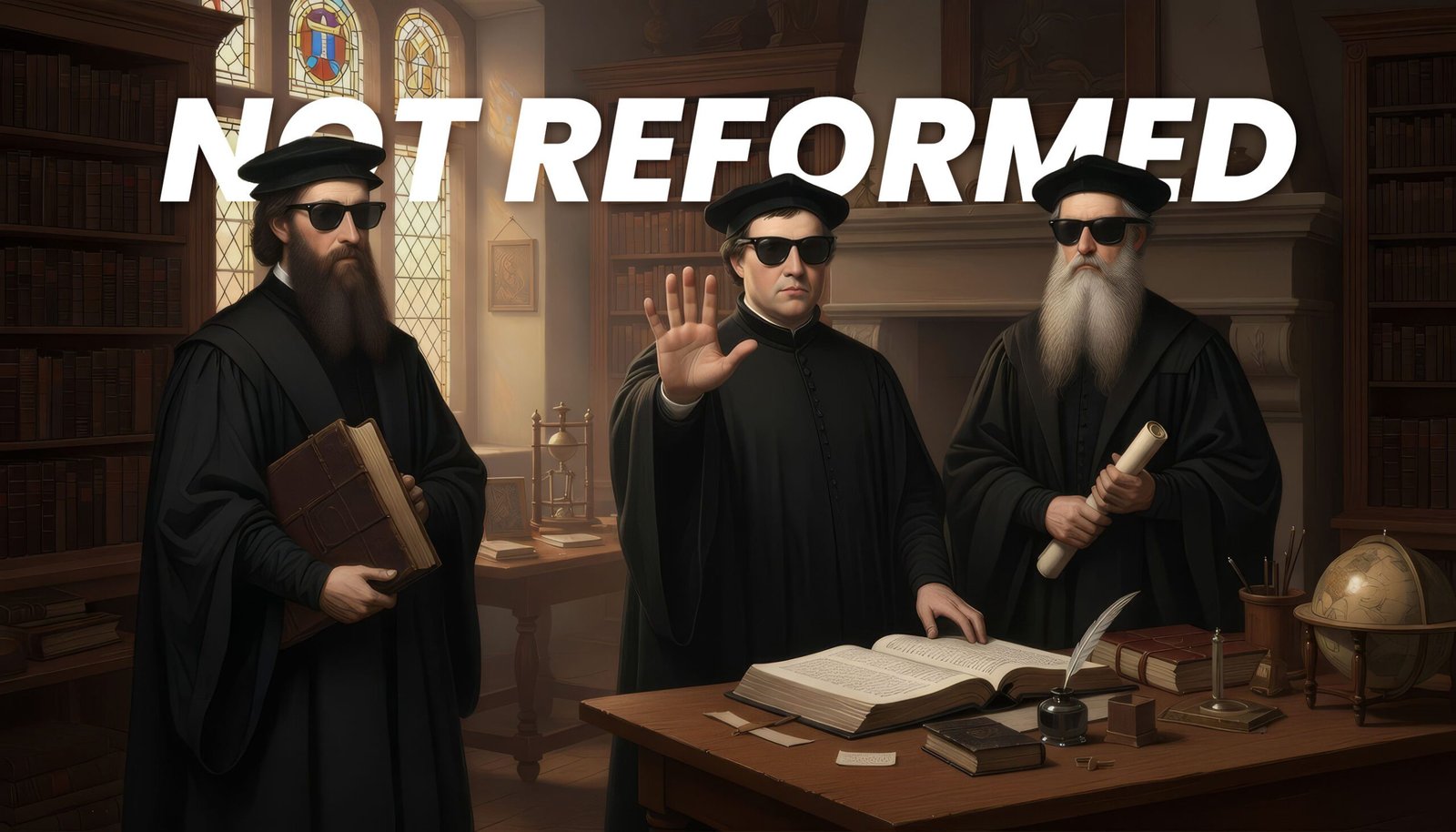
There are many Christians who claim the title “Reformed”. It has become somewhat trendy in some circles within Evangelicalism. However, of those who self-identify as “Reformed”, the number who’ve actually read the Reformers or significantly studied the Reformed Tradition is often small. (I should know, I used to be one of them!) Even among churches, pastors and leaders who call themselves “Reformed”, upon closer inspection, it becomes clear that many people seem to make up a Reformed theology in their own imagination.
Some use the term “Reformed” loosely to mean that they believe in the sovereignty of God, or that they affirm the 5 Solas or the 5 Points of Calvinism. However, is that really all that it means to be Reformed?
Affirming the 5 Solas of the Reformation makes one a Protestant, but not necessarily Reformed. Similarly, the Reformed Tradition and Reformed Theology encompass so much more than just the 5 Points of Calvinism (TULIP).
Definitions matter
Ours is an age where words and definitions are constantly twisted to suit the whims of people’s agendas. It should not be so with Christians. We follow the Word made flesh, and believe that words are incredibly important (Prov. 18:21). If one is going to take up the title of “Reformed”, it should mean something concrete and based in history and reality. Otherwise, we cause confusion by talking past each other and making up our own definitions for words.
By the end of this article, perhaps some of you reading may realize that you’re not actually Reformed. And that’s OK.
I get it—we’re all on a journey, and I didn’t arrive here overnight.
I’m not kicking you out of the Kingdom for not being Reformed enough. However, I’d encourage you to continue to study and be convinced of these things before you take up the title.
For others, they’ve been using the term as a way to get cultural status or legitimacy with a trendy title, even though they don’t actually hold to the things which are definitive of being Reformed. I was once a part of a church that marketed itself as “Reformed”, but as issues came up and I referred to Reformed resources and tradition, it became clear that they were not on the same page. This was misleading and comes off as grifting.
When COVID came up, it made things very clear—since the Reformed Tradition has many resources on political theory and public theology, but they both didn’t know of them or sought to glean from them. Classic Reformed works on politics like Samuel Rutherford’s Lex Rex, Vindiciae Contra Tyrannos, John Cotton’s On the Limitation of Government, William Perkins’s Treatise of Christian Equity and Moderation, Abraham Kuyper’s Lectures on Calvinism or even the end of Book IV of Calvin’s Institutes, seemed to be ignored, though some of these same Reformed and Puritans would be quoted at length when it came to issues of piety and salvation. If we’re “Reformed”, I reasoned, then why not consult what our Reformed forefathers wrote concerning these matters?
It seemed to me that there was some intentional cherry picking of the Reformed Tradition happening.
But this was symptomatic of the types of ministries and churches that were born out of the New Calvinism movement, which was basically centred around the 5 Points and 5 Solas alone. Many churches built off the momentum of the Reformed resurgence of the early 2000s, even though they were not actually Reformed. Some adopted Calvinistic soteriology and combined it with megachurch attractional models, as if theology were something piecemeal to assemble yourself as a buffet. To those, I think they should either find a different term or actually become Reformed.
So, what does it truly mean to be Reformed?
We’ll consider the question from both historical and theological perspectives. Here are 7 essential marks of being truly Reformed:
- Adherence to the Five Solas of the Reformation
- Subscription to Historic Reformed Confessions
- Embracing the Doctrines of Grace
- Covenant Theology as a Hermeneutical Framework
- The Regulative Principle of Worship
- Biblical Ecclesiology and Sacraments
- God-Centered Piety and Public Theology
As we will see, these are not just points I made up but are based upon the historical and theological legacy of the Reformers themselves, as well as contemporary Reformed theologians today.1Now, if you disagree with my points, that’s fine—I’m just a guy with a blog anyway. But you should at least have a more coherent, theological and historically based definition of what it means to be truly Reformed. In the very least, I hope it at least gets you thinking more intentionally about how we use and define the term “Reformed”. My concern is not so much kicking people out of some sort of “in group”, but rather that we understand the meaning behind the words we use and not just jump on a bandwagon.
1. Adherence to the Five Solas of the Reformation
This one is pretty basic and in many ways should be true of all Protestants.
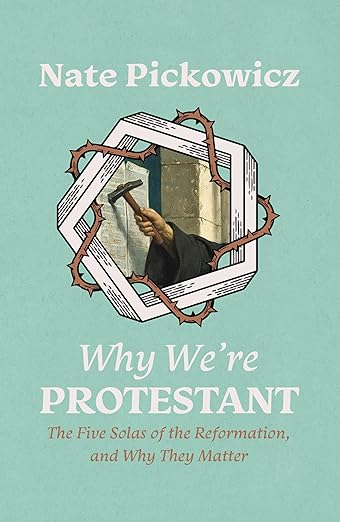
The Five Solas are:
- Sola Scriptura—Scripture alone is the ultimate authority
- Sola fide—we are justified by faith alone
- Sola gratia—Salvation is by grace alone
- Solus Christus—Christ alone is our Mediator and Saviour
- Soli Deo gloria—glory to God alone
These are the foundational principles. These aren’t optional; they define Reformation theology against Roman Catholic errors like papal authority or merit-based salvation.
The five Solas must not just be affirmed, but also lived out in practice. While the material principle of the Reformation was Justification by Faith Alone, the Formal principle was Sola Scriptura. This is at the heart of Reformed Theology—that Scripture must reform every aspect of our thought, affections, and actions. This was what drew me to Reformed Theology. It was not about following some man (like John Calvin as some erroneously accuse), but it was about following the Scriptures and pushing that as far into every area as we can.
This means living by Scripture’s sufficiency in all life; for a church, it shapes preaching, sacraments, and governance. For Christians, it means that we seek to apply Scripture to every area of our lives. We must believe that salvation is by grace through faith in Christ alone, not adding or taking away anything. And, we must endeavour to do all things to the glory of God—whether inside or outside of the church. All of life—everything from what meals you cook for your family, how you vote, pay your taxes, do your work, to how you discipline and educate your children and more—everything is to be to His glory.
Without the 5 Solas, one drifts from Reformation roots. These form the basis for all of life and ministry, and are the common foundation to which we can appeal in matters of dispute.
It should be pretty uncontroversial to say that if you don’t hold to the five Solas, you are not Reformed.
2. Subscription to Historic Reformed Confessions
A telltale sign of not actually being Reformed is the lack of a historic confession.
Every single branch of the Reformed Tradition has a confession.
The Reformed Baptists have the 1689 Second London Baptist Confession of Faith. The Presbyterians have the Westminster Confession of Faith. The Dutch and Hungarian Reformed have the Belgic Confession, the Swiss have the Second Helvetic Confession, the French had the Gallican Confession, etc. These confessions cover everything from Scripture’s authority to eschatology, ensuring a comprehensive Reformed worldview.
This confessional nature is a defining hallmark of the Reformed tradition, inherited from the Protestant Reformers who sought to reform the church according to Scripture’s authority (sola Scriptura). These documents aren’t seen as additions to the Bible but as faithful expositions of its teachings, helping to guard against error, unify believers, and provide a clear articulation of orthodoxy. Without such confessions, a group drifts from the Reformed heritage, as the tradition emphasizes doctrinal precision and ecclesiastical accountability. This commitment to confessionalism is one of the marks that help keep Reformed churches healthy and orthodox. Churches that go astray usually begin by ignoring and departing from their confessions.
In an age that is radically individualistic, relativistic, and narcissistic, that celebrates “follow your heart” and dismisses external authority, formal confessions challenge this mindset. They challenge us to submit to something that has both theological and historical weight, and to learn from the wisdom of generations past.
I’ve written about the need to recover the use of Confessions here. This is why I sometimes ask if someone or a church is “confessionally Reformed”—since usually if they’ve gone far enough to adopt a confession, it means that they’ve studied enough to have a meaningful understanding of what it means to be Reformed.
If you are not confessional, you are not Reformed.
3. Embrace of the Doctrines of Grace
The Young Restless and Reformed Movement (YRR) of the early 2000s (a term coined by journalist Collin Hansen in his 2008 book) was a grassroots resurgence among young evangelicals (mostly millennials) who embraced Calvinistic soteriology (the study of salvation). “Young” referred to the demographic (20s-30s at the time). “Restless” to their dissatisfaction with shallow evangelicalism in things like prosperity gospel, emotional revivalism, and pragmatic church growth models. “Reformed” referred to their adoption of certain doctrines rooted in the Protestant Reformation. Many pastors today who claim the title “Reformed” come from the influence of the YRR Movement. I was in my 20s when I was influenced by it.
Figures such as John Piper, R.C. Sproul, Paul Washer, John MacArthur, Voddie Baucham, Al Mohler, Wayne Grudem, Tim Keller, The Gospel Coalition, and many others turbocharged the appeal of Calvinistic theology in modern evangelicalism. Think of it as a revival: in a sea of Arminian-leaning, seeker-friendly churches, YRR injected urgency about God’s sovereignty, countering the “me-centred” gospel with the Doctrines of Grace. It reinvigorated interest in the Five Points of Calvinism (TULIP): Total Depravity, Irresistible Grace, Limited Atonement, Unconditional Election, and the Perseverance of the Saints.
I remember when I discovered the beauty of the Doctrines of Grace; it was like finding an oasis in the desert in the midst of shallow theology in the average Evangelical church. My heart yearned for depth and wonder at the sovereignty of God. Many others had a similar experience.
For this, we are very thankful.
However, we must go beyond merely admiring the TULIP to living out its implications in life and ministry. An affirmation of God’s sovereignty in salvation should lead us to renounce all manipulative tactics to produce converts. A true belief in the radical sinfulness of fallen humanity should make us skeptical of any Pelagian attempts at moralistic improvement or the unbeliever’s ability to choose God of their own free will. A true understanding of the perseverance of the saints should give us confidence in God’s saving work to the end, and understand that those who went out from us were never of us. Yet one would be surprised how many churches today that claim to love the TULIP have ministry practices that go against it. This just shows that our theology must touch ground—it must be applied consistently.
Furthermore, some call themselves “Reformed” but only affirm 4 out of the 5 points of the TULIP. This is a blatant inconsistency and confusion.
If you do not embrace the Doctrines of Grace in life and practice, you are not Reformed.
4. Covenant Theology as Hermeneutical Framework
Covenant theology is a hermeneutical framework—meaning a method of interpreting Scripture—that views the Bible through the lens of God’s covenants with humanity. A “covenant” here refers to a solemn, binding agreement initiated by God, revealing His character, promises, and purposes. Reformed thinkers typically identify three overarching covenants:
- The Covenant of Redemption: An eternal, intra-Trinitarian pact among the Father, Son, and Holy Spirit to redeem a people for God’s glory. This underscores divine sovereignty from eternity past.
- The Covenant of Works: God’s pre-fall arrangement with Adam as the federal head of humanity, promising life for obedience and death for disobedience (Genesis 2:16-17; Hosea 6:7).
- The Covenant of Grace: Post-fall, this unfolds progressively through historical covenants (e.g., with Noah, Abraham, Moses, David) and finds ultimate fulfillment in the New Covenant through Christ (Jeremiah 31:31-34; Hebrews 8).
As a hermeneutic, CT isn’t about forcing a grid onto the text; it’s about recognizing how Scripture itself organizes redemptive history around these covenants. It emphasizes continuity between the Old and New Testaments, where the Old points forward to Christ, and the New reveals the substance of Old Testament shadows (Colossians 2:17).
As Richard Pratt Jr. puts it succinctly: “Reformed theology is covenant theology.”
Covenant Theology’s hermeneutical power lies in how it magnifies God’s sovereignty across all doctrine.
It ties soteriology (the doctrines of grace) to the bigger picture: Total depravity flows from Adam’s failure in the covenant of works; unconditional election reflects God’s eternal covenant of redemption; perseverance is assured because God upholds His covenant promises (Hebrews 13:20-21). Practically, it shapes ecclesiology (the church as covenant community), sacraments (baptism and Lord’s Supper as covenant signs/seals), and eschatology (God’s kingdom advancing through covenant fulfillment).
While different streams of the Reformed Tradition differ on the details of their covenant theology (e.g. Reformed Baptists vs Presbyterians), it’s enshrined in every major Reformed confession, serving as the interpretive glue for doctrine.
So, if you’re not covenantal, you’re not Reformed.
5. Regulative Principle of Worship
Simply put, the Regulative Principle of Worship (RPW) states that corporate worship (the gathered church’s public praise, prayer, and ordinances) must include only those elements explicitly commanded, exemplified, or necessarily inferred from Scripture. Nothing more, nothing less. It’s the opposite of the “normative principle,” which allows anything not expressly forbidden (think: drama skits, fog machines, or interpretive dance if it “feels” edifying).
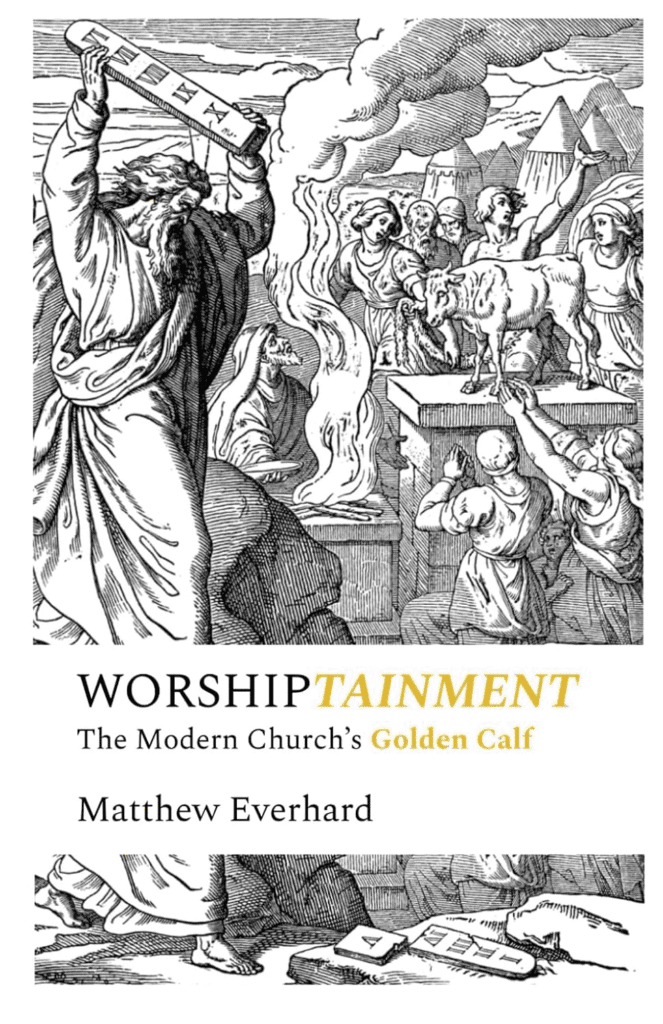
For clarity: “Explicitly commanded” means direct biblical mandates, like preaching the Word (2 Timothy 4:2), singing psalms, hymns, and spiritual songs (Ephesians 5:19; Colossians 3:16), prayer (1 Timothy 2:1-8), reading Scripture (1 Timothy 4:13), and administering sacraments (baptism and Lord’s Supper, per Matthew 28:19; 1 Corinthians 11:23-26). “Exemplified” includes patterns from the New Testament church, such as orderly gatherings (1 Corinthians 14:40). “Necessarily inferred” allows logical necessities, like using a building or microphones for audibility, but not innovations like incense or statues.
John Calvin, in his Institutes (Book IV, Chapter 10), lambasts “human inventions” in worship, insisting: “God disapproves of all modes of worship not expressly sanctioned by His Word.” The 1689 London Baptist Confession states that,
the acceptable way of worshipping the true God, is instituted by himself, and so limited by his own revealed will, that he may not be worshipped according to the imagination and devices of men, nor the suggestions of Satan, under any visible representations, or any other way not prescribed in the Holy Scriptures.
Many of the Reformers also wrote liturgies for their churches and made great efforts to reform the liturgy. Every major Reformed confession enshrines the Regulative Principle of Worship, making it a litmus test for confessional fidelity.
As I’ve argued elsewhere, the Regulative Principle of Worship is simply the principle of Sola Scriptura applied to our liturgy. Often paired with the Regulative Principle of Worship (though not always) is a view of family-integrated worship in the corporate Sunday worship gathering. To me, this is another logical outworking of the Regulative Principle since Scripture often explicitly notes that kids are with their parents for worship gatherings in the OT, and assumes their continued presence in the NT. There is no command, explicit or implied, to remove kids from the corporate gathering of God’s people. I’ve argued for this extensively here.
A huge part of the work of the Protestant Reformers was in reforming the church’s liturgy and worship. An essential mark of being Reformed is to reform your worship according to Scripture.
If you don’t hold to the Regulative Principle of Worship, you’re not Reformed.
6. Biblical Ecclesiology and Sacraments
Ecclesiology is the study of the church as revealed in Scripture, as the covenant community of God’s people, gathered under Christ’s headship for worship, edification, discipline, and mission. In Reformed thought, the church is both invisible (all elect believers across time, united to Christ) and visible (local assemblies professing the gospel, marked by purity in doctrine and life).
The Belgic Confession (Article 29) identifies three marks of a true church: pure preaching of the gospel, proper administration of the sacraments, and faithful exercise of church discipline. Without these three marks, there is no true church.
The Reformers didn’t reform soteriology (salvation doctrine) in isolation; they overhauled the church and its practices to align with Scripture. John Calvin’s (Book IV) devotes extensive space to ecclesiology, and many other Reformers wrote at length about it. While there is diversity in church polity and governance within various Reformed confessions, there is remarkable unity on the essentials of the offices (elder & deacon), as well as the need for a true plurality of eldership to lead the Church.
Sacraments, in Reformed theology, are the two ordinances instituted by Christ: baptism and the Lord’s Supper. They are “visible signs and seals” of God’s invisible grace, confirming the promises of the covenant of grace to believers (Romans 4:11; Heidelberg Catechism, Q. 66). Baptism signifies union with Christ in His death and resurrection, incorporating us into the church (Romans 6:3-4); the Lord’s Supper nourishes faith by proclaiming Christ’s death until He returns (1 Corinthians 11:26). The Supper is not merely a memorial (Zwinglian view), but rather, Christ is spiritually present in it (Calvin’s view). The Sacraments are means of grace—ordinary elements (water, bread, wine) through which the Holy Spirit strengthens faith, but only efficacious for those who receive them by faith.
Why tie these together? Ecclesiology provides the context for sacraments—they’re administered in the church, for the church, reinforcing its covenantal identity. Skip them, and you’re left with a disembodied faith that ignores Scripture’s communal emphasis. Without biblical ecclesiology, you get lone-ranger Christians or megachurch spectacles, eroding accountability. Without sacraments, grace becomes abstract, missing tangible assurance.
If you don’t hold to biblical ecclesiology and administration of the sacraments, you’re not Reformed.
7. God-Centered Piety and Public Theology
The Reformers and Puritans after them believed that all of life was to be lived “Coram Deo”, before God. They sought to apply the faith to society—reforming family worship, ethics and pursuing the Kingdom’s advancement in the world. Though they were pious, they were not pietistic—retreating from the culture and limiting their faith to a sacred sphere. Sadly, some in the Reformed world—particularly in the Radical Two Kingdoms theology—have slipped into a form of pietism.
Piety refers to a holistic devotion to God that permeates every aspect of life—heart, mind, soul, and strength. As Joel Beeke explains, this piety is comprehensive: Theology (knowing God) shapes attitudes and actions, making every breath an act of worship. The 1689 London Baptist Confession (Chapter 19) affirms the moral law’s binding role in sanctification, fuelling ethical piety that extends to cultural spheres.
Public Theology is that area of theology that has to do with how God’s Word is applied in the public sphere outside the four walls of the church. It encompasses what is commonly referred to as “Cultural Engagement”.
This means applying Christ’s lordship to every “square inch” of creation—family, education, politics, arts, business, and more. This isn’t passive tolerance; it’s active reformation, where believers disciple nations (Matthew 28:19-20) by infusing biblical truth into societal structures. This should be obvious to anyone who has studied the influence of the Reformers on their societies. As Geneva’s reformer, Calvin reformed education, welfare, and governance under Scripture, modelling engagement without theocracy’s excesses. The Puritans, Reformed heirs, also embodied this—think of William Perkins, whose works blended theology with practical piety for cultural impact. Our whole Western world is the inheritance of Reformed theology in practice, transforming societies, government, politics, education, the arts, and law.
If we are truly heirs of the Reformation, we should also seek to bring the Christian worldview to bear on all of life. We must recover the Dominion Mandate.
We cannot keep our faith private; it must be taken public—this is why the development of a robust Public Theology is so important. Scripture forbids us from keeping our faith private.
“So everyone who acknowledges me before men, I also will acknowledge before my Father who is in heaven, but whoever denies me before men, I also will deny before my Father who is in heaven.” (Matthew 10:32—33
“You are the light of the world. A city set on a hill cannot be hidden. Nor do people light a lamp and put it under a basket, but on a stand, and it gives light to all in the house. In the same way, let your light shine before others, so thatb they may see your good works and give glory to your Father who is in heaven.” (Matthew 5:14—16)
Christians are to be salt and light to the world. Wherever we fail to do so, as a consequence, it becomes dark and decaying. This is why things like woke culture have overtaken our world these days—as much as we want to blame the liberals down the street, the blame really lies with Christians who kept their faith private. But when Christians have taken their faith public, it has led to cultural transformation and the most prosperous and free societies the world has known.
All of this is simply the outworking of the Reformation principle of Soli Deo Gloria—that all things are to be done to glorify God. How we think, feel, and behave in both our private and public lives are to bring glory to God. All our institutions—churches, schools, governments, businesses, etc.—are to glorify Him.
“For from him and through him and to him are all things. To him be glory forever. Amen.” (Romans 11:36)
This is what fuels the truly Reformed—the glory of God.
Together, piety fuels engagement. There is no sacred-secular divide because Christ is Lord of all. A Godward heart propels outward action. Transformed people transform cultures, avoiding both worldly compromise and escapist isolation.
If you’re not pursuing God-Centred Piety and Cultural Engagement to the glory of God, you’re not Reformed.
Why not Paedobaptism?
At this point, I’m sure there are some “Reformed Bros” out there who are itching to say that if you’re not Paedobaptist, you are not Reformed. However, before they go off on their keyboards, let me explain why the baptism issue (while important) is not included in this list of Reformed markers.
Firstly, let me offer some clarity for the uninitiated: Paedobaptism (from Greek pais, child) is the baptism of infants, typically by sprinkling or pouring, based on the belief that children of believers are included in God’s covenant promises. It is often tied to covenant theology by those espousing it (e.g. Presbyterians, Dutch Reformed, etc.), viewing baptism as a sign and seal of the covenant of grace, akin to circumcision in the Old Testament (Genesis 17:7-14; Colossians 2:11-12). Credobaptism (from Latin credo, I believe) insists baptism follows a personal confession of faith, usually by immersion, symbolizing the believer’s union with Christ’s death and resurrection (Romans 6:3-4). Baptists will often point to the pattern in the New Testament of baptism following confession of faith (citing the lack of explicit texts showing the baptism of infants), and that baptism in the New Testament is by immersion.
My point here is not to get into a baptism debate—though some may argue that that should be a mark of being truly Reformed. LOL 😅
If we were to make Baptism a defining issue, we’d have to kick out Puritans like John Bunyan, Benjamin Keach, and William Kiffin or later men like Charles Spurgeon. If you continued down that line, you’d also need to kick out congregationalist Puritans like John Owen, Thomas Goodwin, Jeremiah Burroughs, Richard Mather, Cotton Mather and John Cotton.
Even though significant Reformers such as John Calvin, Ulrich Zwingli and Heinrich Bullinger defended paedobaptism, the Baptists are a part of the Reformed history and tradition. The Particular Baptists in 17th-century England were heirs to Reformed thought. They drafted the Second London Baptist Confession (1689), which parallels the Westminster Confession (1646) in a majority of ways, except for credobaptism. In fact, the first draft of the Baptist Confession predates the Westminster. The Three Forms of Unity (Belgic Confession, Heidelberg Catechism, Canons of Dort) imply paedobaptism through covenant continuity but don’t excommunicate credobaptists. The Synod of Dort (1618-1619), a Reformed high point, focused on grace doctrines without enforcing paedobaptism as a litmus test.
Historically, then, Reformed identity predates rigid baptismal lines.
If paedobaptism were essential, confessions would universally condemn credobaptism—they don’t. Instead, there is much shared theology and tradition between Reformed Baptist and Paedobaptist brethren.
What Do I Do if I’m Not Reformed?
Don’t worry—you haven’t lost your salvation (unless you’re an Arminian… joking!😅😅).
I’d recommend that if you’ve read this far and see that these are really essential markers of what it means to truly be Reformed, but you’re not quite there, then hold off on adopting the term. It’s OK to be figuring things out, and I’d encourage you to continue to study reformed resources on these topics.
If you believe some of these points, but not all of them, perhaps utilize different terminology for clarity—such as “I’m Calvinistic in my soteriology, but I’m still working through other points of Reformed thought.”
You should understand and mean the words you say.
I think that we serve each other well when we do our best to communicate with clarity and precision. In the world, there is sometimes a temptation to be in the “in crowd” by identifying ourselves with a highly regarded group. For Evangelical Christians who hold the Protestant Reformers in high regard, that temptation may also be present in quickly adopting the title “Reformed”. However, we should understand the weight behind that term and be sure that it fully represents what we believe before we hastily jump to use it.
For me, the Doctrines of Grace were just the entry drug. While those around me were content to just stare at the TULIP, I started reading the original sources and digging deeper. The same Reformers who were being quoted on issues of salvation and piety also wrote great volumes on family worship, law, politics, education, ecclesiology and much more.
I’m Reformed because I have thoroughly given myself to studying these issues and testing them with Scripture. Through this process, I realized that I am convinced of their truth and would consider myself to be Reformed and continuing to grow in my knowledge and appreciation of the rich depth of the tradition. As a result, I obviously would love for others to come to similar convictions, but I encourage them to honestly wrestle with it themselves.
If you’d like a list of recommended reads to help you in your own journey, click here.
Soli Deo Gloria.
Footnotes
- 1Now, if you disagree with my points, that’s fine—I’m just a guy with a blog anyway. But you should at least have a more coherent, theological and historically based definition of what it means to be truly Reformed. In the very least, I hope it at least gets you thinking more intentionally about how we use and define the term “Reformed”.